- Sonoma County Insider
- Posts
- Mortgage Rates Below 6.2%—But Luxury Still Can't Move
Mortgage Rates Below 6.2%—But Luxury Still Can't Move

David Hargreaves
January 23, 2026
Here's Sonoma County's dirty secret: while luxury homes languish for months like forgotten bottles in a cellar, starter homes are getting snatched up faster than tables at SingleThread, and that recycling bin you've been filling so carefully? You're probably contaminating the entire system with those supposedly earth-friendly compostable bags that can't actually be composted anywhere.
This week we're breaking down why wine country's $2 million properties sit 2.5 times longer than homes under a million, why 40% of what you're tossing in those colored bins is ending up exactly where it shouldn't, and settling the century-old rivalry between St. Helena and Healdsburg by examining which wine town actually offers smarter investment fundamentals beyond the birthday candles.
Wine country has fractured into three completely separate markets operating under the same ZIP codes, with luxury homes over $2 million sitting on the market 2.5 times longer than properties under $1 million while sellers cling to 2021 pricing fantasies that today's buyers simply aren't buying.
Those compostable bags, utensils, and cups you've been dutifully using to save the planet belong in your regular garbage bin according to Sonoma County officials, contributing to a staggering 40% residential contamination rate that's turning your green intentions into processing nightmares.
St. Helena just turned 150 years old as an incorporated city, but beyond the anniversary parties lies a fascinating tale of two wine towns where Healdsburg's $2 million price advantage, year-round community energy, and steadier appreciation patterns often trump Napa's prestige for buyers seeking actual livability over pure cachet.
Pour yourself something good, settle in, and let's get into what's really moving wine country markets this week.
If you were sent this newsletter by a friend, you can get your very own copy by signing up here
Market Insight
Wine Country's $2M+ Homes Sit 2.5X Longer Than Starter Properties
The national housing conversation loves simple narratives: rates are up, affordability is down, buyers are screwed. But if you're actually looking at Sonoma County real estate right now, you know it's way more complicated than that.
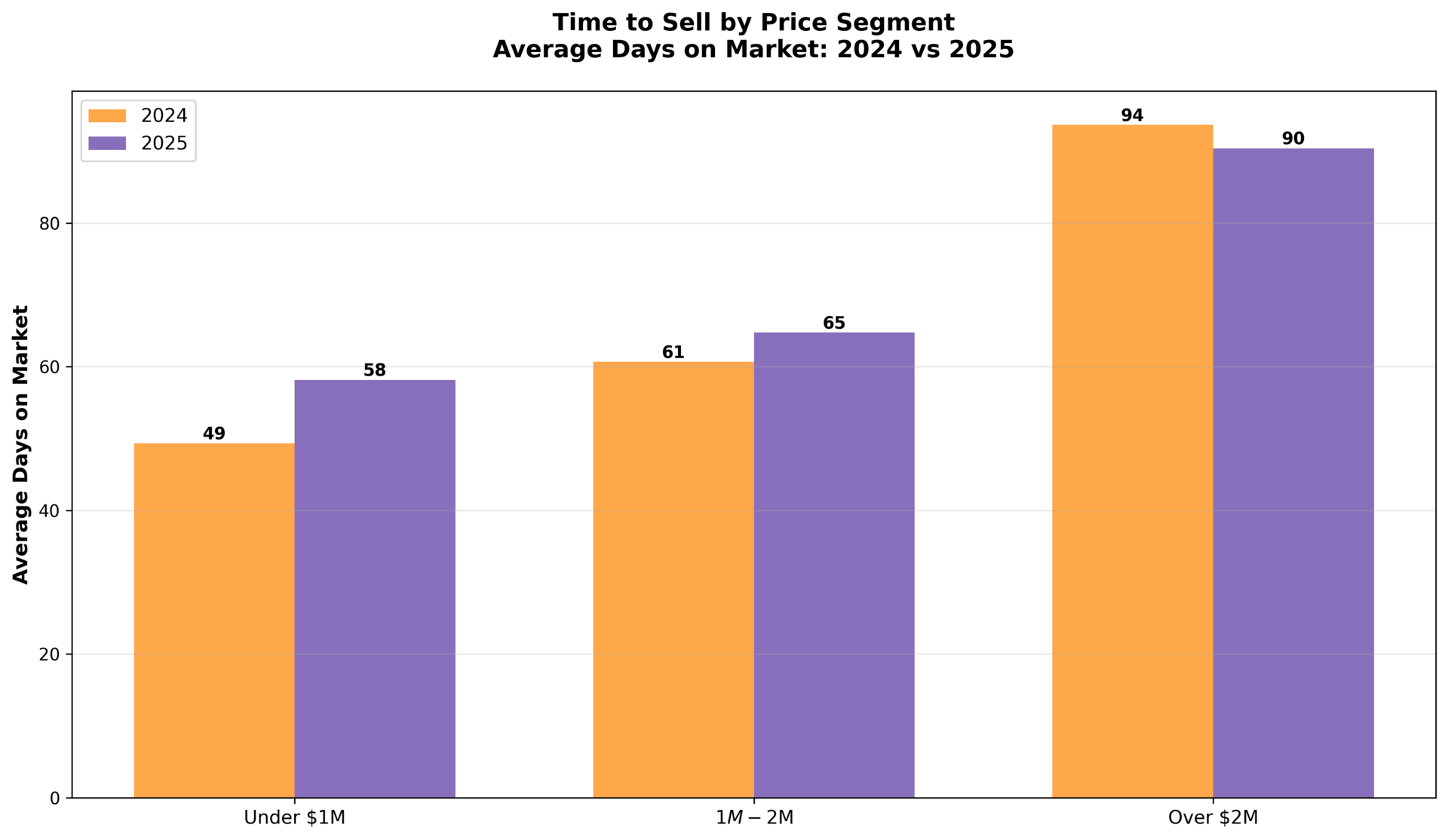
We just finished crunching the numbers on 2025's market data, and here's what nobody's talking about: Sonoma County isn't one market anymore. It's three completely different markets operating under the same ZIP codes, and the tier you're shopping in determines whether you're in a buyer's paradise or still fighting tooth and nail for properties.
Whether you're a Bay Area tech worker finally ready to trade your commute for vineyard views, empty nesters looking to cash out of that big family home, or first-time buyers trying to get into wine country before it's completely out of reach—your experience is radically different depending on your price point.
The luxury disconnect
Homes over $2M are sitting 2.5x longer than properties under $1M
High-end inventory jumped 15% year-over-year while entry-level dropped 8%
Sellers in the luxury tier are still pricing like it's 2021—buyers aren't buying it
The missing middle squeeze
Properties between $1M-$2M are getting squeezed from both sides
First-time buyers stretching budgets compete with downsizers selling $2M+ homes
This segment saw the fastest absorption rate improvements in Q4 2024
The entry-level hunger games
Homes under $1M are moving 40% faster than luxury properties
Inventory remains tight despite slight improvements from historic lows
Multiple offers still common in desirable Sonoma County neighborhoods

What this means for you
Bay Area relocators with $2M+ budgets finally have negotiating power after years of seller dominance. Empty nesters looking to downsize from larger estates can find competitive $1M-$2M options but need to price their current home realistically. First-time buyers and young families still face the toughest competition under $1M.
Want the full breakdown of absorption rates, days on market, and strategies for your specific situation?
Lifestyle News
Wine Country's 40% Recycling Failure: You're Probably Doing It Wrong
Those compostable bags you've been carefully filling with vegetable scraps and tossing in your green bin? They're contaminating the entire load.
Rob Carey found out the hard way when Sonoma County Resource Recovery slapped a pink violation notice on his Sebastopol green bin. His crime? Using bags literally labeled "compostable" for compost.
Welcome to recycling's greatest conspiracy.
The compostable con
Those bags marketed as biodegradable alternatives to plastic can't actually be composted at commercial facilities or in your backyard. Same goes for compostable utensils, straws, plates, and cups—basically anything wearing the compostable label like a green badge of honor. They all belong in your regular garbage bin, defeating the entire purpose of buying them.
How bad is the confusion?
Sonoma County residents are failing the recycling test at alarming rates:
Residential recycling carts show contamination around 40%
Commercial bins hit 35% contamination—roughly double what's considered typical
Soft plastics and film make up 60-70% of contamination items
At facilities processing Sonoma County material, contamination jumped from under 1% historically to 10%—the maximum allowed for certified California recycling centers
The actual rules (because clearly we all need them)
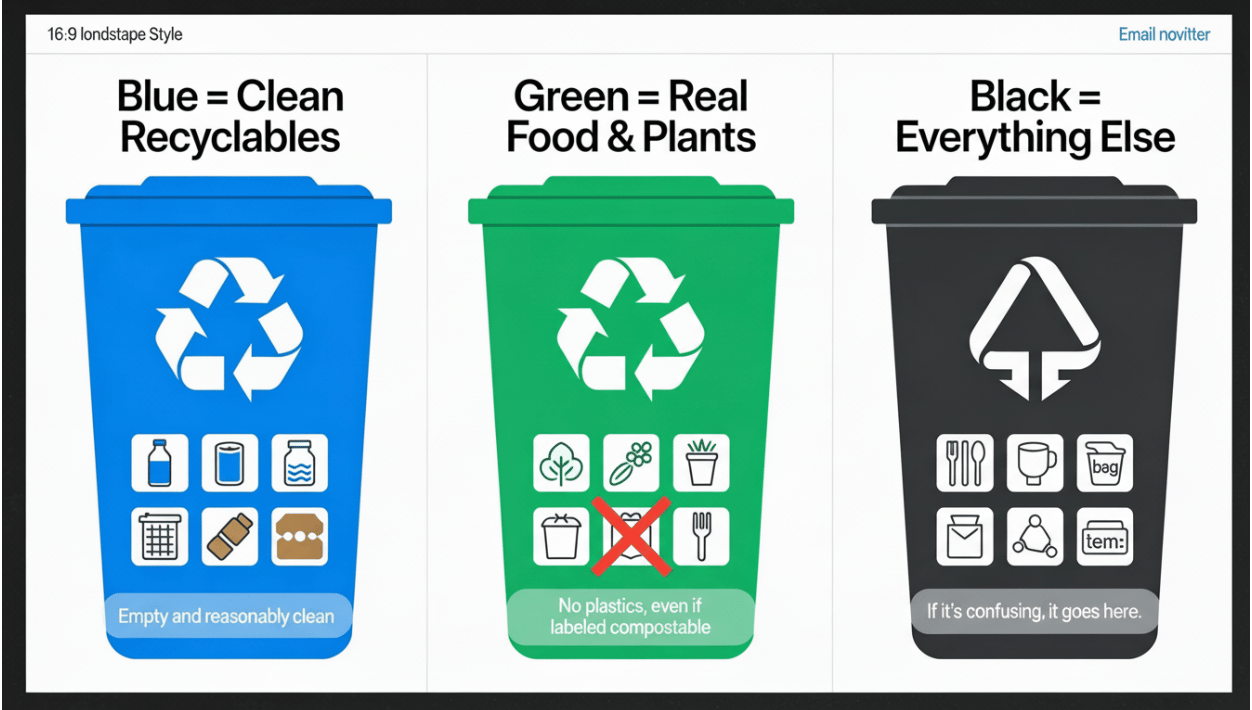
Blue bin = Clean recyclables only
Bottles, cans, clean paper and cardboard
Hard plastics, glass bottles/jars, metal cans, flat cardboard
Key word: clean and empty
Green bin = Real food and plants
Anything that once grew and isn't wrapped in plastic
Food scraps including meat, dairy, bones
Coffee grounds, yard trimmings
Greasy paper like used napkins and pizza box bottoms (if no plastic lining)
No bags of any kind—just toss scraps directly in
Black/gray bin = Everything else
If it's confusing, it goes here
All those "compostable" products fooling everyone
Plastic-lined cups, compostable forks
Any bags (compostable or regular plastic)
Mixed-material packaging
The right move
Toss food scraps directly into your green bin without any bag, or use paper bags if you absolutely need a liner. Your vegetable peels don't need a wrapper—they're literally designed to decompose
Lifestyle News
Which Wine Town is Older? The Answer Depends on How You Count
St. Helena turns 150 this March, celebrating a century and a half since its official incorporation on March 24, 1876. But here's the twist: Healdsburg's town site was actually laid out first in 1857, while St. Helena's town site dates to 1854-55. When it comes to incorporation as a city, though, Healdsburg beat St. Helena by 9 years (1867 vs. 1876).

Downtown St Helena
The age debate depends on what you're measuring:
Town founded: St. Helena edges ahead (1854-55 vs. 1857)
Incorporated city: Healdsburg wins (1867 vs. 1876)
St. Helena's planning a yearlong celebration of its 150th anniversary of incorporation with block parties, parades, and monthly themed events covering everything from indigenous history to the wine industry. The city's working with local wineries and hotels to boost tourism during the festivities.
But beyond birthday candles, there's a bigger question: why do some buyers pick Healdsburg over St. Helena despite Napa's premium cachet?
The $2 million price gap tells part of the story. St. Helena's median hit $3.1 million in July 2025, while Healdsburg sits at just over $1 million. That's a massive entry barrier.
St. Helena leans hard into exclusivity. About 9.7% of total housing stock serves as seasonal homes, creating quieter off-season streets. The economy runs almost entirely on wine and tourism, making it vulnerable to industry shifts. Infrastructure challenges like water supply and road repairs top resident concerns.
Healdsburg spreads risk wider. Only 5.2% of housing is seasonal, keeping the plaza active year-round. The economy mixes wine with craft food, outdoor recreation, and small manufacturing. The city runs its own utilities and has a full hospital with 24-hour emergency services.
Connectivity matters too. St. Helena relies on Highway 29, which clogs during peak tourist season. Healdsburg sits on Highway 101 with direct airport access, making Bay Area commutes manageable.
Investment patterns differ sharply. St. Helena's luxury tier jumped 21% to $2.15 million in Q2 2025, while the overall market dropped 11.8%. Homes above $3 million carry 11.5 months of inventory (buyer's market), while properties under $2 million have just 2.3 months (seller's market). Average days on market: 60.
Healdsburg shows steadier performance at 3.8 months inventory across price points. Well-priced homes sell in 33 days. Since 2000, values climbed 285% with smoother volatility than St. Helena's higher but rockier gains.
The lifestyle contrast is stark. St. Helena delivers polished Main Street boutiques and world-class dining at Press and Farmstead. It's curated and exclusive. Healdsburg's 19th-century plaza acts as the town's living room, with 30+ walkable tasting rooms and everything from three-Michelin-star SingleThread to casual neighborhood spots.
For buyers seeking pure Napa prestige with higher risk and reward, St. Helena delivers. For those wanting community energy, practical infrastructure, and consistent appreciation, Healdsburg typically wins. Both hold long-term value through limited supply and global demand, just via different paths.
Real Estate News
Mortgage Rates Drop Below 6.2%—Buyers Finally Make Their Move
The 30-year fixed mortgage just hit its lowest level in nearly three years, hovering around 6.0–6.2%. That's down from over 7% a year ago and the best rate environment since early 2023. While we're not returning to the 2–3% pandemic era, the Fed's recent cuts (federal funds rate now sits at 3.5–3.75%) have created enough breathing room to shake loose some activity.

Here's what's happening nationally:
Mortgage applications jumped 16% week over week and 13% year over year in early January
Weekly pending home sales hit 50,096—the highest in years
National inventory climbed 10% year over year as more sellers test the market
Price-cut activity increased to roughly 35%, creating better negotiating conditions
Home values are essentially flat, with forecasts calling for modest 2% growth through 2026
From rate shock to rate acceptance
In 2022–23, buyers were paralyzed by the jump from 3% to 7%. Now in 2026, many have stopped waiting for miracle rates and are recalibrating their plans around a 6% world. The psychology has shifted from "I'll wait for rates to drop" to "I'll make the numbers work now and refinance later if rates improve."
What it means for Sonoma County
The "lock-in effect" is weakening but not gone. Homeowners who felt trapped by their sub-4% mortgages are starting to make moves driven by life changes—job relocations, family needs, downsizing, or finally making that wine country lifestyle upgrade they've been postponing. The gap between their old rate and today's options has narrowed just enough to justify pulling the trigger.
For buyers eyeing Sonoma County from the Bay Area, the monthly payment difference between 7% and 6% on a $1.5 million property is roughly $800—meaningful relief that's bringing people back to open houses and serious conversations with their lenders.
The 2026 outlook
Most forecasters expect rates to drift into the high-5s by year-end if inflation cooperates, but consensus says we're not seeing another plunge. Fannie Mae and J.P. Morgan both project rates settling into a "new normal" around 5.5–6.5%. The Fed is largely expected to stay on hold through 2026 with maybe one more small cut, meaning most of the big rate adjustment is already behind us.
Nationally, existing home sales are projected to rise modestly—roughly 2–3%—as lower monthly payments bring buyers back. Inventory continues rebuilding from ultra-low levels, with more than 1.2 million homes for sale nationally as locked-in owners finally test the market.
Think of 2026 as a thaw, not a boom—gradual improvement rather than frenzy. The market is finding its footing in this new rate environment, and early indicators suggest demand is quietly rebuilding rather than roaring back.
Home Build Guide
1 in 5 New Homes Are Custom Built—Here's Why Buyers Skip the MLS
About 1 in 5 new homes built in America is truly custom—down from the long-run average of 25%—which means the people choosing to build today aren't chasing mortgage-rate deals. They're designing the next 20–30 years of their lives.
Economists track custom building more closely to household wealth than interest rates, signaling these projects are "life design" decisions: deploying equity and assets to create exactly what resale homes can't offer.
Why people are choosing custom over compromise
The self-builder surveys are clear: people build custom when they stop waiting for the perfect existing home to appear.
Layout designed around specific needs—dedicated home offices, workshop space, wine storage, guest suites for visiting family, indoor-outdoor flow for California living
Multigenerational functionality: main-floor primary suites, separate living quarters, accessible design for aging in place
Energy efficiency and comfort built in from day one—not retrofitted years later
Control over materials, finishes, and quality standards that resale homes rarely deliver
Room to breathe: custom lots often provide the acreage, privacy, and views impossible to find in developed neighborhoods
Large self-build surveys show many custom clients are in mid-life or later, explicitly building a home "to carry them through the rest of their lives." Instead of vowing to declutter or be more present, they design storage systems, quiet zones, and gathering areas into the house itself.
The best build-ready rural lot in Sonoma County under $900k
If you're looking for a build-ready rural lot, we have what's probably the best option in Sonoma County listed under $1 million.
This 55-acre property just over 30 minutes from downtown Healdsburg eliminates the typical 12–18 month pre-development phase custom builders face.
Already in place:
30 GPM well with power installed
Dual 200-amp electrical services
5-bedroom perc test complete, full septic design ready for permit
Fully developed 24-foot-wide driveway
2-acre building pad graded and ready
Four 5,000-gallon water tanks with gravity feed to build site
Storm water mitigation and fire hydrant setup complete
Custom building is inherently optimistic—it assumes a stable future and confidence in your community. This property lets you skip straight to designing your next chapter with panoramic views and wine country access.
Local News
Three Storms Just Solved A Wine Country Investment Concern
Lake Sonoma just released 22,400 gallons per second—that's the sound of a water crisis that isn't happening.

Back-to-back atmospheric rivers starting before Christmas filled the North Bay's reservoirs to their seasonal brims. Lake Sonoma, the region's largest, now sits at 103% of target capacity. Translation: enough water to supply Sonoma County through 2026 even if it never rains again.
The numbers:
Lake Mendocino: 103% capacity, gained 35% volume since mid-December
Lake Sonoma: 103% capacity, added 11% volume
Lake Pillsbury: 200% of seasonal target, more than doubled since mid-December
Santa Rosa rainfall: 15.7 inches (126% of historical average) since October 1
The reservoirs are so full that the Army Corps is releasing 3,000 cubic feet per second from Warm Springs Dam—making room for potential future storms while maintaining enough reserve for drinking water, irrigation, and wildlife.
The system serves 700,000 customers from Mendocino County through Sonoma County to northern Marin. Even if weather patterns shift dry like 2013 (Sonoma County's driest year on record), Lake Sonoma's size means it could handle the drought.
What this means for property values: Full reservoirs signal water security—a major concern for buyers evaluating wine country investments. Recreation season looks strong (swimming, boating, fishing), which supports tourism-dependent communities and second-home appeal. Three consecutive winters of average-to-above-average precipitation suggest the acute drought fears of recent years are receding.
Current Listings


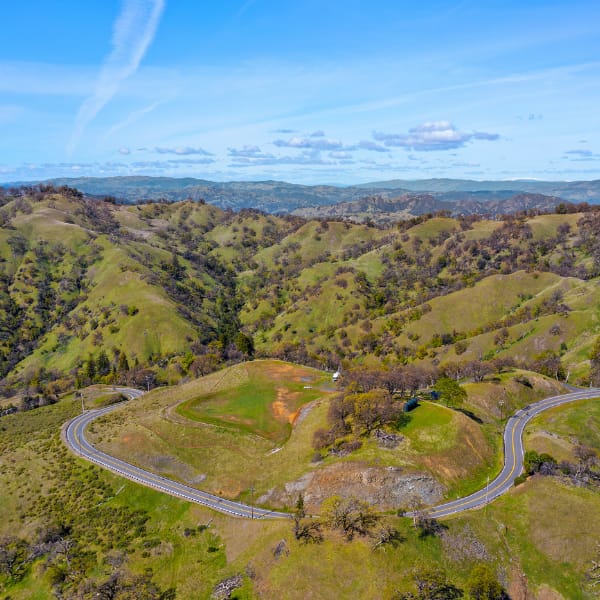

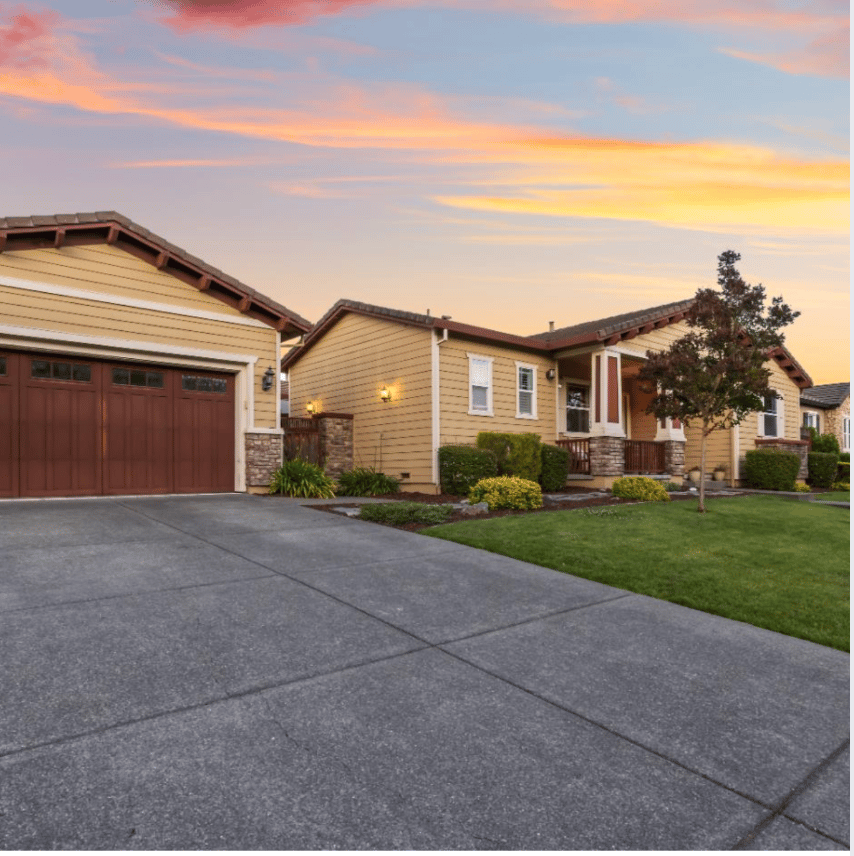
What’s Happening This Week
Sonoma History Cabaret: “Gold on the Roof”
Where: Buena Vista Winery – Bubble Lounge (Sonoma, CA)
When: Saturday, January 24, 2026 • 4:00 PM – 5:00 PM
Why You Should Go: An amusing historical musical about Count Agoston Haraszthy (Buena Vista’s founder) and a 19th-century gold heist—wine, laughs, and Sonoma history combine in California’s first premium winery’s plush lounge.
Jason Isbell and the 400 Unit
Where: Luther Burbank Center for the Arts (Santa Rosa, CA)
When: Wednesday, January 28, 2026 • 7:30 PM
Why You Should Go: Grammy-winning singer-songwriter Jason Isbell and the 400 Unit brings his Southern swagger and tender country ballads to Wine Country’s premier performing arts venue—this is storytelling through song at its finest.
Healdsburg Jazz Winter Festival Opening Night
Where: Harmon Guest House – Merritt Hall (Healdsburg, CA)
When: Thursday, January 29, 2026 • 6:00 PM & 8:00 PM
Why You Should Go: Kick off a four-day jazz festival presented by Healdsburg Jazz in intimate Healdsburg venues with acclaimed artists performing unique formats—world-class jazz meets Wine Country sophistication.
Got friends dreaming of wine country life? Share this newsletter and save them from doomscrolling Zillow
Follow our somewhat professional adventures on Instagram @bruingtonhargreaves
Check our YouTube channel for weekly local market updates (and occasional winery mishaps)


David & Jonathan here – the guys who write about real estate but really just want to talk about our favorite taco trucks. Hit us up about anything Sonoma County (or beyond). Whether you're buying, selling, or just want to know which wineries actually welcome dogs – we've got you covered.